
Digital access and capability are no longer optional. While once we could comfortably separate online and offline life, digital inclusion is now a key determinant of a young person’s future opportunities, no matter what field they enter. Farmers, rangers [link to ranger blog] and others working on the land are now incorporating technology into their everyday practices, just as office workers do.
The city vs regional divide: what the index reveals
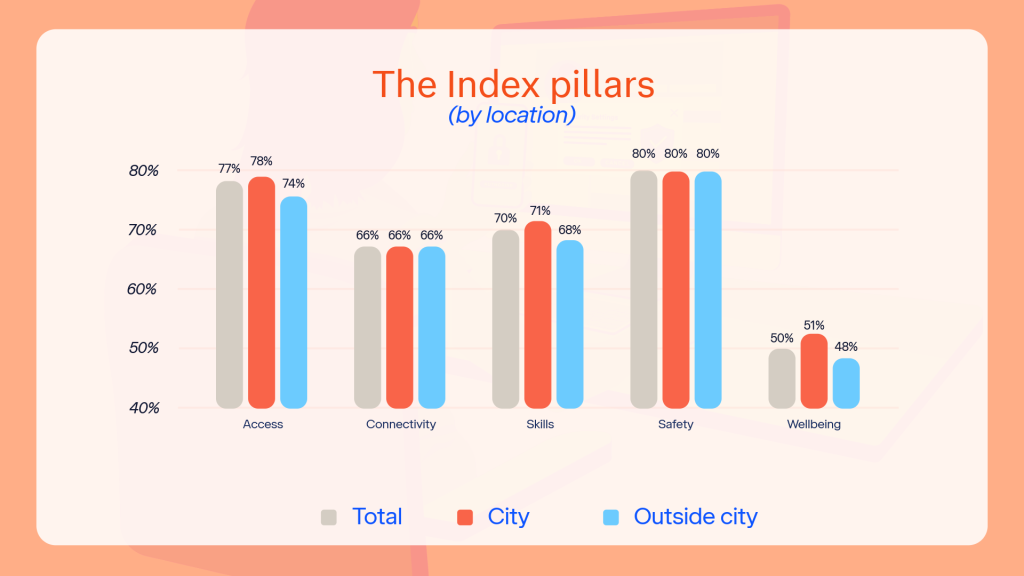
But the latest Australian Youth Digital Index reveals a clear digital divide based on location. While the national Index sits at 68, young people outside cities lag behind at 67. It’s a small difference on paper, but one that hides deeper inequalities in exposure, training and opportunity. Regional and remote young people score lower on three of the five pillars making up the index.
Access to devices: the uneven playing field
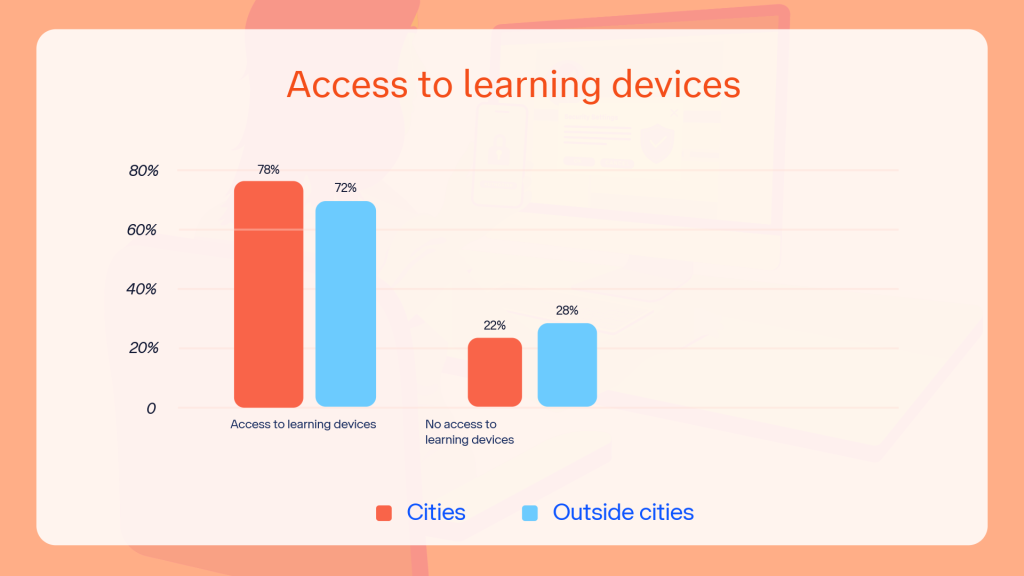
Access to devices is still uneven, with more than a quarter (28%) of regional youth reporting no access to a learning device (laptop or desktop computer), compared with 22% in major cities. This reduced access has an immediate impact on education generally, but also means fewer opportunities to practise and improve key digital skills.
.
Training and skills: gaps in education and opportunity
Across almost every measure of training, preparedness and digital aspirations, regional young people are trailing their city-based peers, scoring 68 on the skills index compared with 71 for those in cities.
The data shows consistent gaps in the training young people receive. City-based young people:
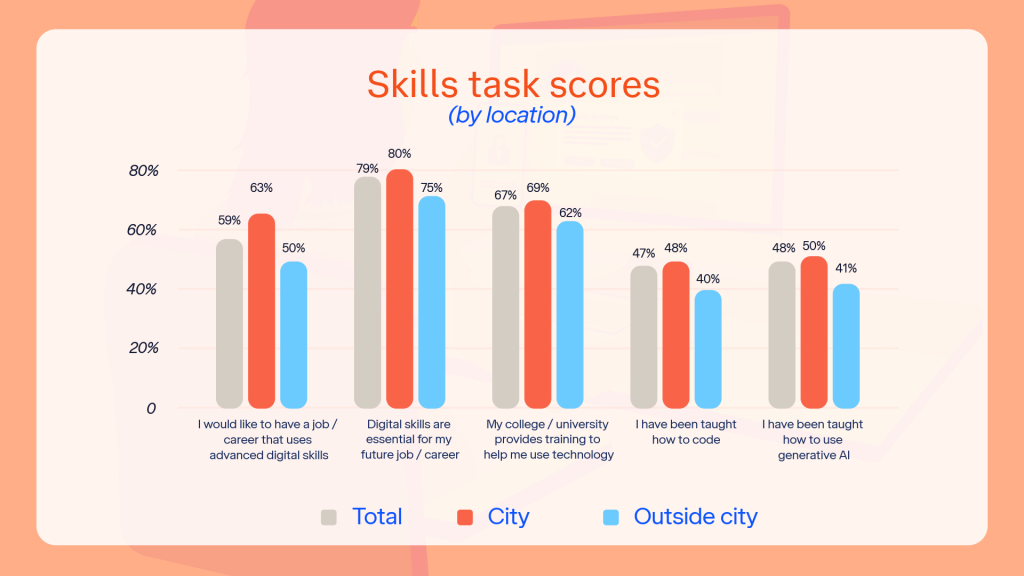
- are more likely to say their school provides useful technology training (78% vs 77% for regional/rural/remote young people). [up from 73% in 2024]
- also report better university training (69% vs 62%). (Although this is nevertheless an improvement from 50% for regional/rural/remote young people in 2024.).
- report stronger on-the-job technology training (68% vs 65%).[unchanged from 2024]
The disparities flow through to particular skills like coding and AI.
- 48% of city young people have been taught to code, compared with 40% in regional areas.
- 50% of city young people have been taught how to use generative AI, compared with 41% regionally.
- Young people in regional areas are also less likely to have taught themselves either coding or how to use generative AI.
Aspirations and career pathways: regional youth falling behind
It’s hardly surprising that regional young people are less likely to picture a digitally driven career (50% want a job using advanced digital skills compared with 63% of city-based peers). However, an increasing number believe digital skills are essential for their future job (75% of regional/remote young people compared with 72% in 2024).
When regional young people lack access to training and emerging technologies, it becomes harder for businesses to modernise, harder for communities to attract new industries, and harder for local economies to grow.
To ensure regional young people have equal digital opportunities, investment is needed in:
- Technology-enabled learning for regional schools
- Teacher capability and confidence in digital skills
- Access to devices
- Regional pathways into coding, AI and emerging tech fields
Unless training, infrastructure and opportunity catch up, young people in regional and remote areas may continue to fall further behind, at the very moment AI is redefining what it means to participate in the workforce.
The wellbeing gap: online life in city and regional areas
Young people living outside Australia’s major cities experience a noticeably different online life from their city peers.
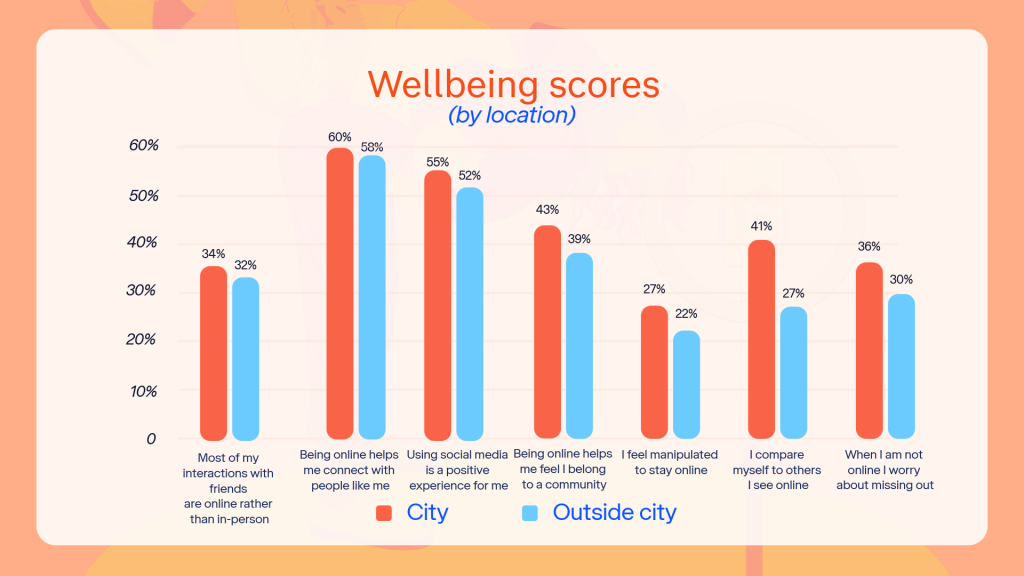
City-based young people are more likely to say that being online helps them feel connected, express themselves creatively, and build meaningful friendships.
In contrast, young people outside cities are less likely to report strong online friendships, positive social media experiences, or a sense of belonging in online communities.
The Wellbeing score is higher for young people living in major cities in Australia (51) compared to those living in regional/remote areas (48). This means that fewer regional young people feel technology has a positive impact on their lives, but does not necessarily mean technology has a greater negative impact.
In fact regional young people are less affected by some of the negative aspects of technology. The report a lower impact on self-esteem and also feel less manipulated to stay online.