
The Australian Youth Digital Index online dashboard allows us to examine answers to every question through a gender lens.
Girls rank slightly better on Access, Connectivity, and Skills than boys, but notably lower on Wellbeing (index score 48 compared with 52 for boys).
Impact on Wellbeing
In particular, girls were more likely to say devices had a negative impact on their mental health and on their sleep and less likely to say devices had a positive impact in these areas.
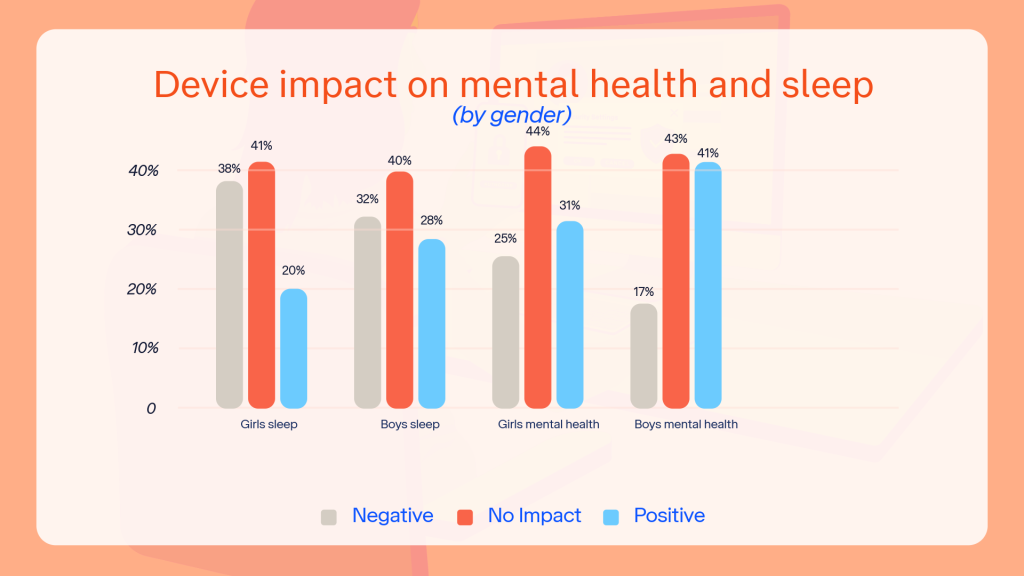
Girls were also less likely to say they had a good balance between online and offline time, and much more likely to say they compared themselves to others online. On the flipside, however, boys were more likely to feel manipulated to stay online
Devices and getting online
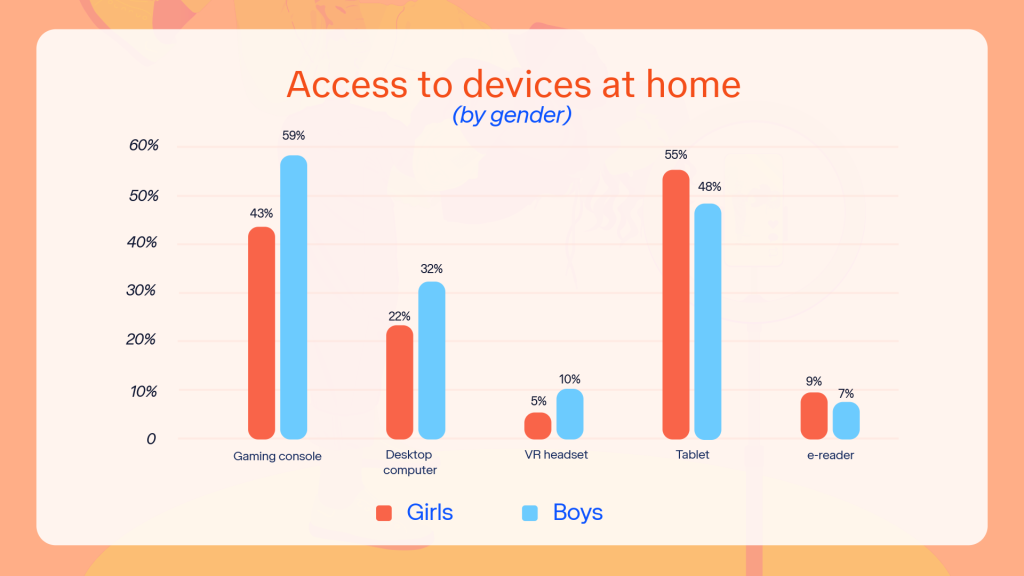
There were differences in the devices used and how different genders went online. Boys were more likely than girls to have home access to a gaming console, a desktop computer and a virtual reality headset, while girls were more likely to have home access to a tablet, e-reader and laptop than boys.
While home WiFi was the most frequent means of connection for young people of all genders, girls were more likely than boys to connect to the internet via WiFi outside the home, such as at school, work or libraries/public places. Girls were less likely to agree they had sufficient storage space (69% vs 75%) but also less likely to feel restricted by mobile data allowance (25% vs 29%) and home internet allowance (22% vs 25%).
Social media use
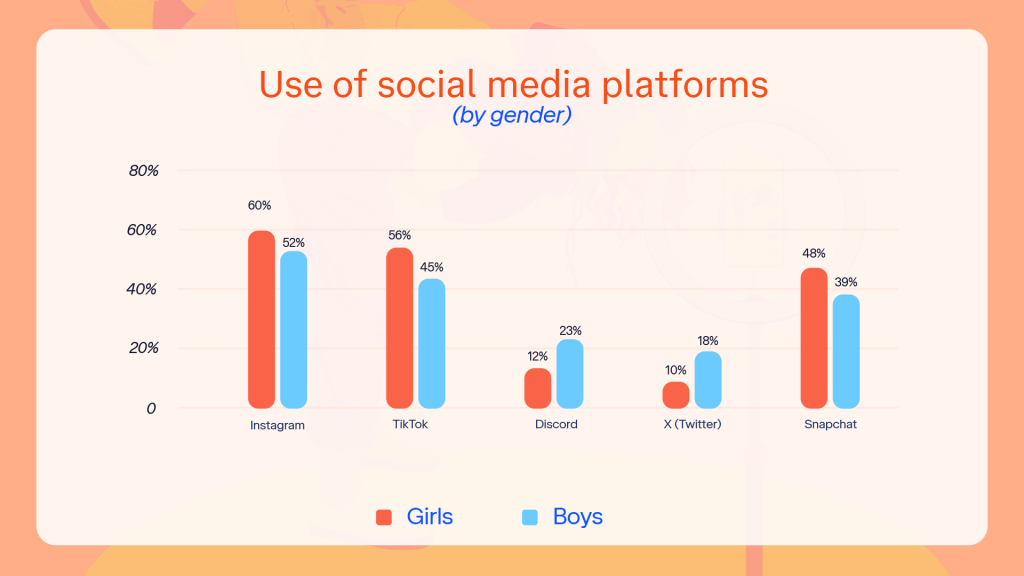
Girls and boys have different preferences when it comes to social media apps – girls are much more likely than boys to use Pinterest and also more likely to use Instagram, TikTok, Facebook and Snapchat. Boys are more likely than girls to use Youtube, Discord, X and WhatsApp.
Skills, AI and Careers
Girls were more likely to say they could use the internet to do everything they needed (90% vs 85%), and generally showed greater confidence with a range of digital skills, but boys were more confident with fixing their device or internet connection.
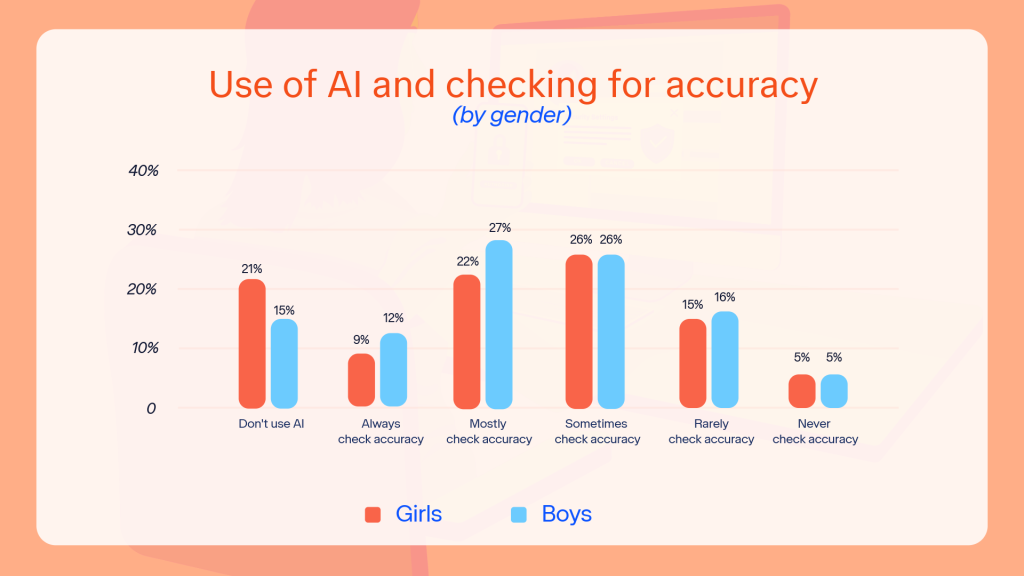
Boys were greater adoptors of AI and also more likely to check the accuracy of information provided. Boys were also more likely to say they found it easy to use AI to help with their studies or work (58% vs 54%).
Around two-thirds (67%) of boys had an interest in a future career using advanced digital skills whereas only 51% of girls did, although this figure has risen from 47% in 2024.